Wednesday, 17 May 2017

Story Stones

These have been on my to do list for a while.  I saw some on (shh) pinterest and thought, we can do that!

Mainly pictures to follow! we took the pebbles we collected on our forage walk to the beach and downloaded a sheet of symbols from education.com.

 After giving our pebbles a bit of a clean we looked at the pictographs and decided to use some of the ones on the sheet and design a few of our own too, based on the stories in some of the books we've been reading.


Once we had decorated our stones we decided to stencil a bag to keep them in.  Iona chose a wolf stencil I had cut for making our flags.


Sunday, 23 April 2017

Tipi and Buffalo (our crafting projects!)

 I could have subtitled this, the theatre taught me nothing!


 So for this topic, where we were focusing on oral storytelling, we decided to make a  tipi to sit in and use as a storytelling and listening den.  We have a conservatory. which is still chilly at this time of year but it does have a small heater, perfect.

 Sewing was out, I looked at numerous patterns and decided seeing as my skills are minimal that it could only lead to sadness.  However, a bit of digging and this amazing tipi leapt out at me as something that was both attractive and achievable.

 We made a visit to the borders scrapstore to augment our fabric and glue gun supplies, then had at it!  Our wood frame came from a local fencing and timber yard, all in (fabric, glue, rope) it probably cost around £30.

 When it was all assembled we cut stencils and made some flags to string up, we just used a bit of liquid poster paint and Ikea's cheapest calico fabric.


Our other major craft project was a buffalo head.  I had watched an art program with Iona (Mr Maker I think) where he made a pinata, I immediately realised we could use the same technique to make a frame for a paper mache style faux taxidermy.

So, I drew and cut out my basic shape and then made him 3d by putting in a long strip of cardboard (it's easier to do that describe!).  I then used tin foil to build a sort of shape, to give contours and fill him out a bit.

 After then tin foil it's back to our good friends pva glue and kitchen towels.  His horns were made from coathanger wire, masking tape, tin foil and then given a top layer with plaster cloth, I bought that at the scrapstore too.  His ears were a piece of fur trim we had, they have a wire frame so they are somewhat poseable.  I hot glued them in place as they turned out a little heavy.


His fur was a massive learning curve! I had planned to make a million pompoms (give or take a few) and hot glue them in place.  For some reason I thought that would be very easy.  A few tantrums later we realised it was not all that easy and it was very slow indeed.  Amazon to the rescue I'm afraid, I bought a set of plastic pompom shapers which turned the whole process from purgatory to lesser purgatory.  Iona and I quickly got good at winding, tying and fluffing pompoms in a variety of sizes.

 I hot glued pompoms in place (used a bit more fur trim for his lower face) and added in some old curtain trim, tassels and edging we bought.


Wednesday, 19 April 2017

Highland wildlife park

After reading many stories featuring the animals native to America we decided to take a trip to the Highland Wildlife Park in the Cairngorms national park.


 The main attraction is a safari style drive through loop where you can get up close with large mammals such as the European bison and elk.  We were very lucky and had close encounters with the elk family as we drove through (and later on a landrover tour).


Iona and I really enjoyed our trip, she had lots of good questions for the tour guide.  Granny came along with us and while she took a break and read the paper Iona and I walked round the hillier areas of the park.  On our walk we found many patches of wild blaeberries, the conditions in the park are perfect for them, high and with acidic soil.


 The highland wildlife park keeps three polar bears and I am still conflicted about that, large carnivores in captivity (even in relatively large enclosures) throw up a lot of questions.  We saw Walker enjoying a swim in his pool and playing with some of the toys he has been provided with for enrichment.

 Less controversial was the Scottish wildcat exhibit, I've never seen a wildcat and was excited to meet the the UKs only wild feline.  With possibly only around 400 individuals left in the wild they are rarer than the Amur tiger.  They are now protected by law and Scottish Wildcat Action are working hard to conserve the remaining cats and educate people who live in areas where wildcats still live about the need to spay, neuter and vaccinate their pet cats to prevent interbreeding and disease outbreaks.

Museum of Transology and two spirit identities


This topic has given us a chance to discuss two spirit identities and trans identities.  While we were in London we visited The Museum of Transology, it's a mobile museum which is collecting and preserving the histories and identities of trans, non binary and intersex people.


 As we looked at the exhibition Iona was excited to talk about identity and how she feels about gender.  She was pleased to see that there was a museum just for "people like us" and she clearly felt really connected to the idea.


 I explained that trans identities have existed forever, that we have a cultural history as rich and deep as any other.  We talked about two spirit people in Native American traditions and how they were venerated and were often shamans or healers.  I watched a couple of excellent videos, you can see them below.  I didn't share all of them with Iona as I felt they had some quite difficult content, but used them to further my own understanding.


During colonisation the honour was stripped from these identities and western gender roles, homophobia and mysogony impacted the community in a terrible way.  Only in recent times (the first recent use of two spirit as an identity was probably in 1990) have native people started to reclaim these identities and to embody them.  


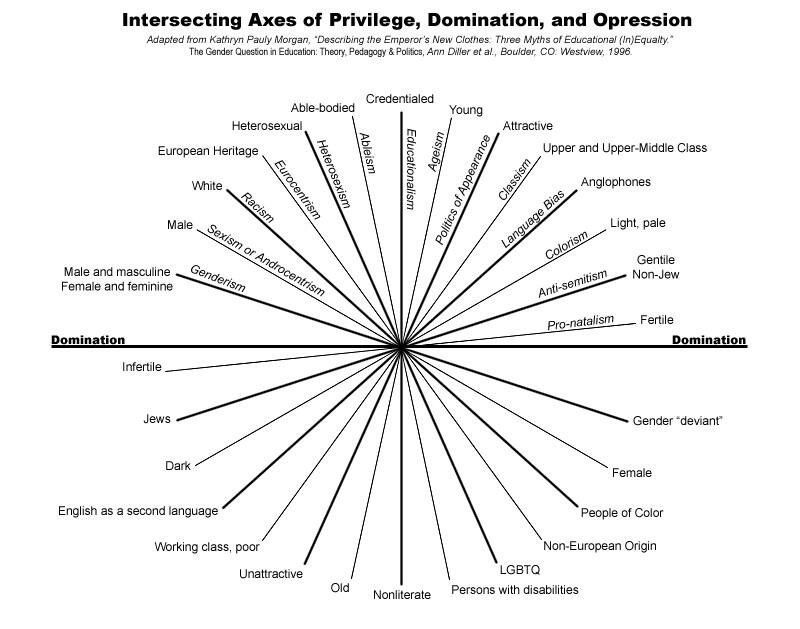
We talked about intersectionality and how coming from two (or more) places where you may be oppressed or victimised increases your vulnerability.  So you may be a woman, a trans woman and a woman of colour and all of those identities are affected by cultural stereotypes, mysogony and transphobia.  There is a really super diagram of intersecting identities here


Where the Thunderbird Lives


Just after coming back from our last London excursion we read in the paper about a new exhibition at the British Museum.   Where the Thunderbird Lives is a study of cultural resilience in the face of many challenges.  It was a fantastic exhibition with an amazing variety of both ancient and modern pieces.  I particularly liked the miniature Copper, by Alison Bremner, a Tlingit artist,.  You can see more of her work here.


The exhibition gave us a chance to talk about the less palatable truths of white settlers attitudes to native people, we talked about residential schools, missions and forced conversion to Christianity, about the way that stereotypes have been/are used to make native people appear either savage and warlike or childlike and  backwards while ignoring the rich artistic and cultural heritage that belong to them.  Our novel for this topic The Birchbark House by Louise Erdrich  has started to touch on the impact of colonisation  and our morning reading was quite dark today as the family and their community endured a smallpox outbreak.


We touched on the importance of Potlach ceremonies and how, when they were made illegal and people could be taken to prison for attending, the culture survived by going underground.  During Potlach ceremonies gifts were given and dances performed.  It was also a time when new titles and rights to certain fishing or foraging grounds were bestowed .  In this video Duane Aucoin explains the importance of Potlach. 


One of the most prestigious gifts or trade items were Coppers.  The modern interpretation above draws from an ancient tradition of metalwork.  


Coppers could be treated like money, each one was extremely precious and they often had names and their individual histories could be traced.  We watched a short film on the process of creating a copper which was absolutely fascinating.  The quote below is from one of the men in the video.


Tuesday, 18 April 2017

National museum of Scotland


 The national museum of Scotland has an unexpectedly large and lovely collection of Native American artifacts.  We enjoyed our visit there and Iona did some drawings as we wandered around.  The collection focuses on Haida art and culture and includes modern works by native artists, including the Raven ask Pontiac series by Larry McNeil, a Tlingit/Nisqa'a artist from the Pacific Northwest.


While we were there we watched a video about the eulachon or candlefish.  Prized among native people for its oil which is used for fuel and also to eat.  Grease from the candlefish was such an important trade product that the routes associated with the trade became known as Grease Trails.


Beach forage walk


One of the nicest things about flexi school is that on a good day we can up and go to the beach or the park and find it completely deserted!  For our first trip in our Native American topic we decided on a favourite beach which we visit every year because of the abundance of wild garlic growing there.


 As we drove we talking about foraging, finding what grows well near us and the way we create a mental map of where things can be harvested.  Wild garlic at the beach, blaeberries on the high, peaty hills, brambles in another spot, salmonberries and mushrooms in the woods near Peebles and so on.  The salmonberry is native to the Pacific Northwest, but was introduced to Scotland by landowners who felt it was decorative and exotic.  It grows very well here and is almost a pest in some areas.  The berries aren't ripe yet, but you can see a video talking about the importance of salmonberries below.


 We talked about the other things you might find on the beach to eat or use.  We aren't fond of seafood and shellfish (and the water quality isn't brilliant either) but mussels are abundant in the river Forth, also there were various varieties of edible seaweed on the beach.  In the sandy area above the beach there were obvious signs of rabbits living in a large warren, a huge tangle of bramble bushes and you couldn't miss the springtime scent of wild (or bear) garlic growing in abundance.


While we were at the beach we picked up lots of lovely smooth pebbles to use in our Story Stones project as well as interesting shells, sea glass and bits of old pots.  Beach-combing is one of my favourite things to do.

 Naturally enough Iona got seawater in her boots and we made our soggy way back to the car.  We stopped for a quick picture with granny (another lovely aspect of flexi/home schooling is the way the whole family can get involved!) and then went home for a nice cup of tea.